
A legal fight over California’s newly adopted congressional map reached the U.S.
Supreme Court this week—and, in a rare move that surprised many court-watchers on the left and the right, the justices declined to step in.
The decision clears the way for California to use a new congressional map in the 2026 midterm elections, a result that Democrats and voting-rights advocates say could offset Republican redistricting gains in Texas.
What makes the outcome politically combustible is the chain reaction that produced it.
Texas, according to widely reported accounts, redrew its congressional districts earlier this year in a bid to maximize partisan advantage.
That effort, critics argue, was undertaken with aggressive political intent—described by some as done at Donald Trump’s explicit request.
In response, California moved forward with its own map changes, framed as a countermeasure.
The question in Washington, and across state capitols, was whether the Supreme Court’s conservative supermajority would treat California’s move differently.
For now, it did not.
California Republicans asked the Supreme Court for emergency relief to block the map, arguing it amounted to an unconstitutional racial gerrymander.
The court denied the request. It issued no written opinion explaining its rationale.
The result, as summarized by the governor’s press office, is that the Supreme Court is allowing the new California maps to stand for the midterms.
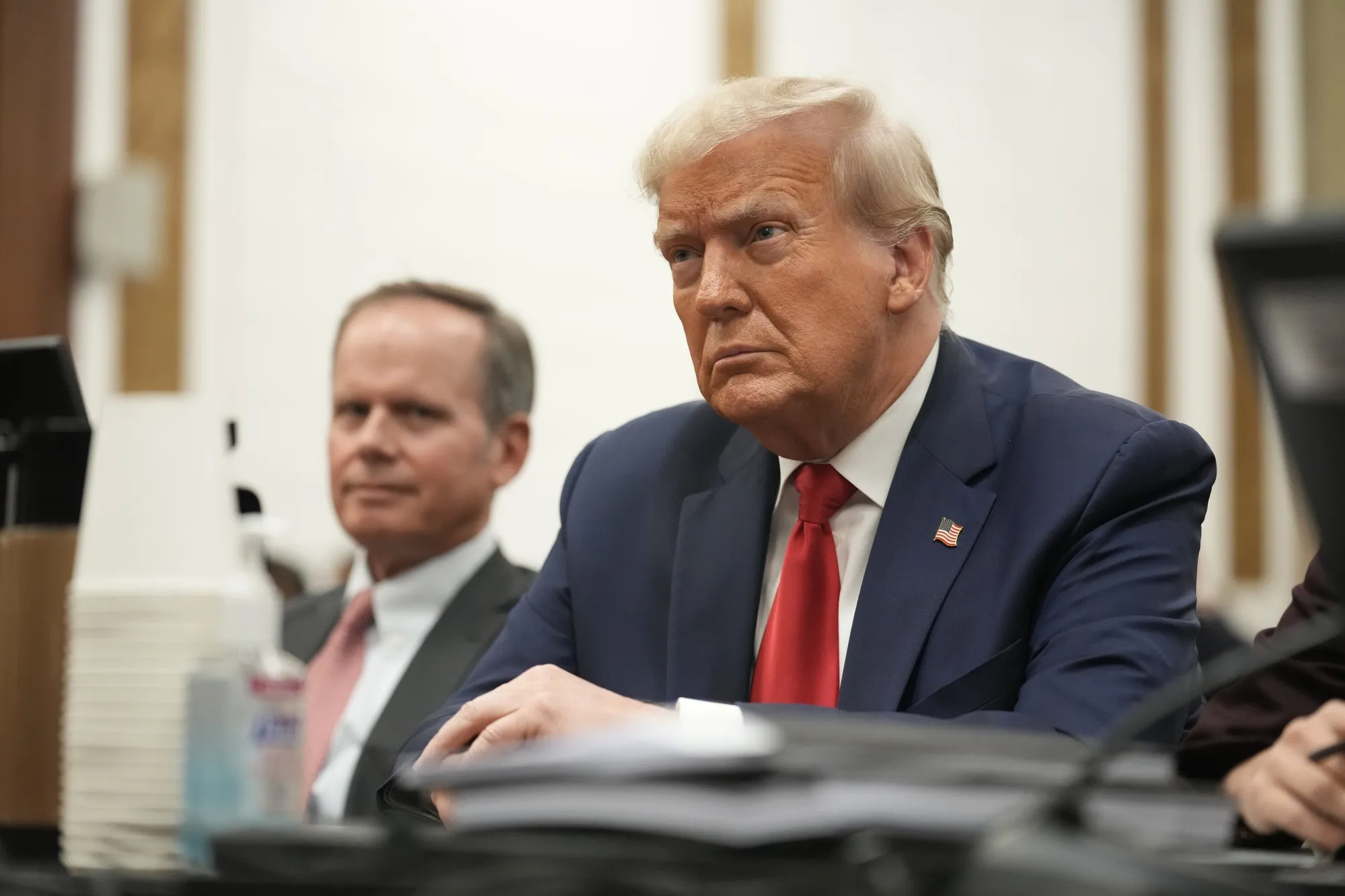
A report from Democracy Docket—an election-law outlet founded by attorney Marc Elias and known for litigation challenging Republican election tactics—described the ruling in blunt strategic terms: the court’s refusal to block the California map “clears the way for Democrats to counter Donald Trump’s redistricting gains in Texas.”
The outlet noted that under the new lines, Democrats could plausibly gain up to five additional seats in Congress.
Texas’s map changes, by contrast, were described as potentially delivering Republicans up to five additional seats.
In other words, a high-stakes redistricting escalation is unfolding in plain sight, with national control of Congress hanging in the balance.
To understand why the Supreme Court’s action—or inaction—has drawn so much attention, it helps to zoom out to the Texas case that came first.
A federal court initially blocked Texas’s map, finding it was likely an illegal racial gerrymander.
But the Supreme Court reversed that lower-court action, a move that handed Texas Republicans—and by extension Trump’s political project—a major win.
In that Texas ruling, the Court’s majority also signaled how it would likely view California’s response.
“Texas adopted the first new map,” the court wrote. “Then California responded with its own map for the stated purpose of counteracting what Texas had done.”
The justices continued: “The impetus for the adoption of the Texas map, like the map subsequently adopted in California, was partisan advantage, pure and simple.”
That language mattered. It suggested that the Court recognized a reality both parties routinely deny in public: redistricting fights are often not about abstract civic principles, but about raw political advantage.
And it suggested something else as well.
If the Court was willing to tolerate partisan motive in Texas, the argument went, it would struggle—at least on consistency grounds—to block California for acting on the same logic.
That was the expectation among some legal analysts.
But it was not the expectation among many progressive court-watchers, who have spent years watching the conservative supermajority reshape election law.
Their concern was simple: even if the Court had previously signaled permissiveness toward California’s move, the justices could still shift when the political incentives changed.
This week’s denial of California Republicans’ emergency request, however, reflected consistency—at least in this narrow procedural posture.
The politics of that consistency detonated almost immediately online.
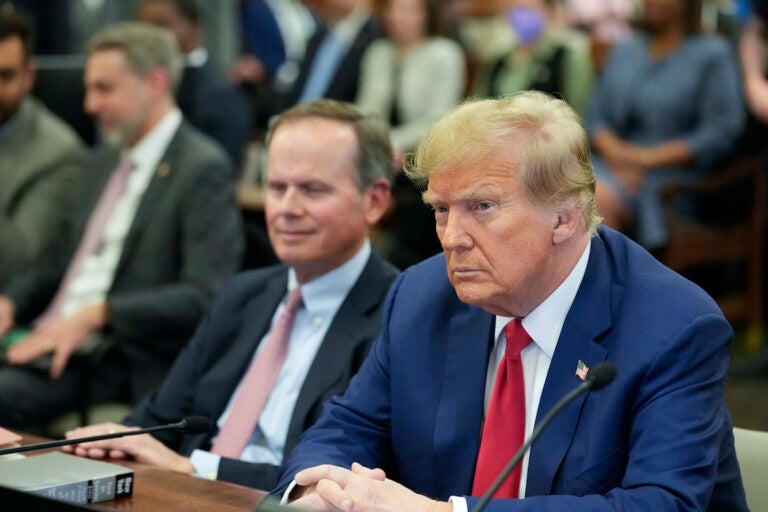
In conservative social media circles, the ruling was framed not as neutrality but as a defeat. One major pro-Trump account posted that the Supreme Court had “upheld California’s pro-Democrat 2026 gerrymandering map that would add as many as five blue seats for the midterms.”
The same post urged other Republican-led states to respond in kind: “We need more red states to redistrict. Florida, you’re next. Don’t hold back.”
The replies were a mix of frustration, calls for escalation, and arguments that the system itself is “broken.” Some commenters insisted that California’s map should be treated differently because, in their view, large metro areas such as Los Angeles dominate statewide politics.
Others argued that if partisan redistricting is permissible, every state should use it to maximum effect.
The argument was revealing: when one side benefits, the practice is defended as strategy; when the other side benefits, it is cast as illegitimate.
California Republicans involved in the challenge had previously argued that race played an impermissible role in the mapmaking process.
One attorney associated with the emergency application said the Supreme Court should stay the map because, in his view, “race played a major factor in the way that these maps were made.”
He pointed to statements by a mapmaker and argued that creating a Latino-majority district without adequate justification crossed constitutional lines.
In the same breath, however, he pointed to analysis—including a UCLA study—suggesting the plan improved Asian voting power, and suggested that Latino groups might reach similar conclusions regarding Latino voting influence in certain parts of the state.
Those comments reflect a central tension in modern redistricting litigation.
Partisan mapmaking is often treated as legally distinct from racial gerrymandering, even though race and party can be tightly correlated in practice.
Plaintiffs frequently argue that lawmakers used race as a proxy to produce partisan outcomes; states often argue they pursued lawful political goals while complying with minority representation requirements.
The Supreme Court’s denial came without explanation, leaving the underlying constitutional questions unresolved at the public level.
But the ruling did not end the broader political battle.
Online, liberal commentators treated the denial as a rare moment in which the conservative supermajority did not bend procedure to protect Republican advantage.
Some declared it a “big loss” for Trump-aligned strategists. Others described it as a dose of poetic symmetry: if Texas could redraw aggressively, California could respond aggressively.
Even among those celebrating, the relief was tempered.
Several analysts warned that the Court may still reshape the electoral map through other pending rulings—particularly decisions involving the Voting Rights Act and the legality of majority-minority districts.
If protections for minority representation are weakened, they argued, Democrats could still lose seats across parts of the South and other regions.
That possibility has fueled a parallel debate: whether Democrats should pursue structural court reform.

Some progressive commentators argued that even with occasional outcomes they approve of, the Supreme Court remains a barrier to federal legislation and voting-rights protections.
They pointed to demands for expanding the Court and imposing a binding code of ethics.
Those arguments have also pointed to a political fact often overlooked in national debate: Republicans have supported court expansion at the state level when it served their interests.
In recent years, critics note, Republican lawmakers in multiple states have added seats to their state supreme courts or changed court structures after receiving rulings they disliked.
The argument from reform advocates is straightforward: if one party treats court restructuring as a legitimate tool when convenient, it cannot claim a principled objection when the other party proposes reforms at the federal level.
For now, the concrete outcome is narrow and immediate.
California’s new congressional map will remain in place for the 2026 election cycle, barring future litigation developments.
Democrats may gain up to five seats under the revised lines. Republicans, already benefiting from Texas’s changes, are openly urging additional redistricting in other red states.
The larger story is about escalation.
Once one major state redraws lines for partisan advantage, the incentive structure pushes other states to respond.
The Supreme Court’s decision not to intervene here—especially after intervening in the Texas dispute—effectively signals that the Court will tolerate a redistricting arms race, at least so long as the arguments can be framed as partisan rather than explicitly racial.
Whether that tolerance holds in future cases, and whether it survives the next Voting Rights Act fight, remains the unresolved question.
But for this moment, the Court’s stance is clear: the new California map moves forward.
And in an era when election law is increasingly litigated like a permanent campaign, even a procedural denial can reshape the battlefield.
⚠️IMPORTANT – COMPLAINTS⚠️
If you wish to have content removed, please send your reason to the following email address:
Warning:
These posts may contain information that should not be taken as absolute truth, but rather as hypotheses, speculations, rumors, and information found online. This content may include gossip, anecdotes, exaggerations, or inaccurate information. Viewers are encouraged to conduct their own research before forming opinions. The content may be subjective.
News

A newly surfaced inventory from Jeffrey Epstein’s “secret” storage unit reads like a missing chapter—items reportedly removed ahead of a 2005 raid, then locked away outside official view. The most unsettling claim: authorities may never have searched it. One line in the file changes how everything else reads|KF
More disturbing details were coming to light about the secret storage lockers tied to Jeffrey Epstein, the disgraced financier once…

My parents didn’t leave an explanation—only a note: “Stay out of sight, freak.” I thought it was the usual cruelty, until a lawyer knocked with a folder and a deadline. One signature, one hidden clause, and I realized the insult wasn’t the point—it was the cover…(KF)
Sierra Merritt’s story begins on her 16th birthday, April 12th, in the quiet, hollow silence of her family’s Westport home….

THE EPSTEIN FILES OPEN AGAIN: 17 DIRTY EMAILS EXPOSED IN A MAJOR EPSTEIN DOCUMENT LEAK, FORCING THE PUBLIC TO CONFRONT QUESTIONS THAT HAVE NEVER BEEN ANSWERED|KF
The release of millions of pages of investigative material related to Jeffrey Epstein has reopened one of the darkest chapters…

WHAT POLICE FOUND BEHIND THE FOSTER HOME DOOR SHOCKED EVEN VETERAN OFFICERS: CHAINS, CONTROL, AND CHILDREN LIVING IN FEAR — ALL REVEALED BY A SINGLE BODYCAM RECORDING||case file (KF)
The New Mexico State Police arrived at the remote cabin just after nightfall. Dispatch radio traffic crackled as officers moved…

A horrifying case in abandoned mine shafts: a borrowed propane tank, a hidden rifle, tire tracks, and a homemade device later recovered—moves so calculated they left even investigators chilled, all tied to the Marine next door | case file (KF)
Aaron Corwin was born on July 15, 1994, in the United States to biological parents who were never publicly identified….

The troubling past of the #1 suspect in the Nancy Guthrie case: the “last person to see her” detail is pushing the investigation into a new direction as records, timing, and movements are re-examined. No public accusation—just mounting pressure, and a background that has investigators uneasy|KF
The investigation into the disappearance of Nancy Guthrie, the 84-year-old mother of Today Show host Savannah Guthrie, has taken an…
End of content
No more pages to load