
It began quietly — with a check.
Not the kind that makes headlines or shakes Wall Street, but one that rippled through Geneva’s marble halls, reshaping the machinery of global health forever. When the Bill & Melinda Gates Foundation became one of the top funders of the World Health Organization (WHO), few realized just how deeply this relationship would influence the world’s most powerful health agency.
Today, two decades later, a debate rages beneath the polished surface of international diplomacy: Has private philanthropy become the unseen hand that steers global health policy?
:format(jpg)/f.elconfidencial.com%2Foriginal%2Ffc5%2F28c%2F5db%2Ffc528c5db342bb2f905d19e1fb84eff7.jpg)
The WHO’s Fragile Purse
To understand the power dynamics, you have to follow the money.
The WHO was founded in 1948 with a noble purpose — to coordinate international health efforts, respond to outbreaks, and promote universal well-being. But over the decades, its funding model has grown fragile and complex. Less than 20% of its budget now comes from mandatory contributions by member states. The remaining 80% comes from voluntary donations — money given by countries, charities, and private organizations for specific purposes.
This is where the story takes a dramatic turn. Because these donations are often earmarked, they dictate how and where the WHO spends its money. It’s a structure that critics say leaves the agency vulnerable to the priorities of its donors rather than the needs of the world’s poorest.
And among those donors, one name towers above the rest: Bill Gates.
The Rise of the Gates Era
When Microsoft co-founder Bill Gates and his wife Melinda launched their foundation in 2000, they promised to tackle the world’s toughest problems: poverty, disease, and inequality. The foundation quickly became one of the largest charitable organizations in history — with an endowment exceeding $70 billion.
Through the Gates Foundation and the GAVI Alliance (Global Alliance for Vaccines and Immunization), which it helped create, billions began flowing into global health programs — vaccines, disease eradication, maternal health, and more.
By 2018, the Gates Foundation had become the second-largest contributor to the WHO, behind only the United States government. Some years, its donations exceeded those of the entire United Kingdom.
For many, this was cause for celebration. The Foundation’s efficiency, innovation, and scale had turbocharged vaccine research and saved millions of lives. Polio was on the brink of eradication. Malaria deaths dropped sharply.
But others began asking harder questions: When private wealth dictates public policy, whose interests truly come first?
The Birth of “Philanthrocapitalism”
The term “philanthrocapitalism” emerged in the late 2000s — a new model of giving that blended business discipline with charitable goals. Bill Gates became its poster child.
Unlike traditional donors who simply handed out grants, Gates demanded measurable results. Programs were expected to deliver — and quickly. Metrics, milestones, and impact evaluations became the language of global health.
This approach revolutionized the field but also introduced a new kind of power dynamic. “When you give billions, you get a seat at every table,” said Dr. Devi Sridhar, a global health expert at the University of Edinburgh. “The Gates Foundation is everywhere — from vaccine policy to disease surveillance to nutrition.”
The foundation’s influence was not inherently sinister. It was often welcomed — even necessary — in a world where governments were slow to act. But it blurred the lines between public good and private interest, between charity and control.

The Criticism Builds
Inside and outside the WHO, whispers grew louder.
Some officials privately complained that Gates-funded initiatives were too focused on high-tech medical interventions — like vaccines and pharmaceuticals — while neglecting broader issues such as poverty, sanitation, and local healthcare infrastructure.
Others noted that the Foundation’s vast resources created a shadow influence — shaping WHO priorities without formal accountability to voters or international law.
An internal WHO analyst once admitted to The Lancet, “When Gates gives money, he sets the agenda. That’s just the reality.”
Indeed, many WHO programs today align closely with Gates Foundation interests — from vaccine campaigns to pandemic preparedness efforts. The question is not whether these goals are noble, but whether any one actor should have so much sway over global health policy.
The Power of a Checkbook
To its credit, the Gates Foundation has never hidden its intentions. Its website openly details its partnership with the WHO and its funding of specific disease initiatives. It sees itself not as a puppet master, but as a partner — stepping in where governments fail.
Yet, transparency doesn’t erase the imbalance of power.
When the WHO relies on a handful of wealthy donors for most of its budget, the institution becomes less of a democratic forum and more of a marketplace — where priorities are auctioned to the highest bidder.
In 2020, during the COVID-19 pandemic, this dynamic came under the global spotlight. As nations scrambled for vaccines and the WHO faced criticism for its early response, the Gates Foundation’s connections to pharmaceutical giants drew renewed scrutiny.
It wasn’t that Gates controlled the WHO — there’s no evidence of that — but his foundation’s deep integration with the organization raised valid concerns about conflicts of interest and accountability in times of crisis.
A Double-Edged Sword
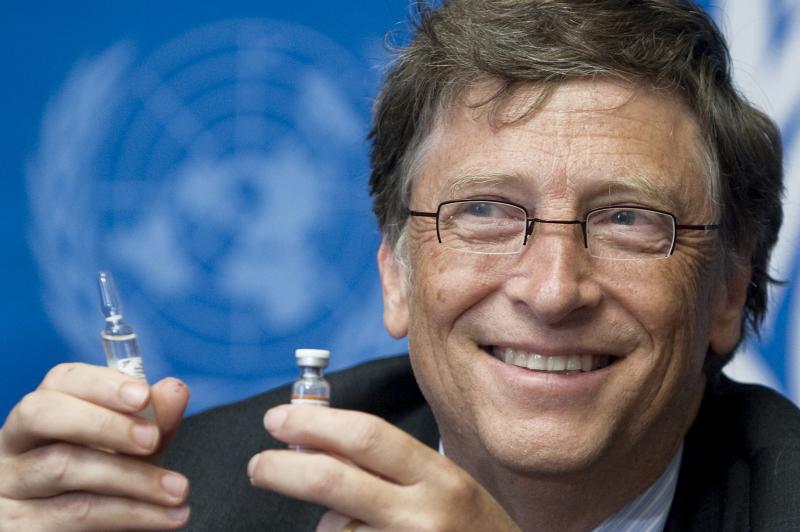
It would be unfair to paint Bill Gates as a villain. The Gates Foundation’s work has undeniably changed the world for the better. It has funded malaria vaccines, HIV research, and public health infrastructure in regions long ignored by wealthier nations. Millions of children are alive today because of those programs.
But critics argue that this system — however effective — is undemocratic by design.
When global health priorities depend on a single billionaire’s worldview, what happens when that worldview doesn’t align with local needs? When vaccine distribution becomes a business of metrics, what happens to human compassion?
Some health advocates call for reform, suggesting that WHO funding should rely more heavily on unrestricted contributions — allowing the organization to set its own agenda. Others urge for greater transparency in donor influence and ethical firewalls between funding and policy-making.
Still, as long as the world’s governments underfund the WHO, private money will continue to fill the vacuum — and with it, private influence.
The WHO’s Dilemma
Today, the WHO walks a tightrope. On one hand, it desperately needs partners like the Gates Foundation to meet global goals. On the other, it must preserve its independence as a public institution representing 194 member states.
The organization’s leadership has defended its collaborations, insisting that all funding decisions follow strict transparency and accountability measures. But even insiders admit that financial dependency makes it difficult to say no to powerful donors.
As one former WHO official put it bluntly: “When your survival depends on voluntary funding, independence is a luxury you can’t afford.”
The Future of Global Health
The debate over Gates’s influence is not really about one man. It’s about the future of global governance in an age of billionaires.
The Gates Foundation is not the only major player. Other philanthropies — from the Wellcome Trust to corporate-backed alliances — are increasingly shaping international agendas. Private capital is now a permanent fixture in public health.
Perhaps the world must confront an uncomfortable truth: we cannot have both total independence and unlimited funding. If governments will not pay, someone else will — and that someone will expect a voice.
The question is not whether Bill Gates should be involved in global health — he already is, deeply. The real question is how the world ensures that public health remains truly public.
A Complex Legacy
As the sun sets over Lake Geneva, the WHO headquarters glows with the quiet hum of purpose. Inside, staff work tirelessly to track outbreaks, support vaccine delivery, and coordinate emergency response.
Their mission — “Health for all” — remains as noble as ever. Yet, the system that supports it is anything but simple.
Bill Gates may not control the WHO. But his presence looms large — a symbol of both progress and paradox. A man who used his fortune to save millions, and in doing so, forced the world to confront its own dependence on private wealth.
In the end, perhaps this is the real lesson: the health of the world should never rely on the generosity of the few, no matter how generous they may be.
Until nations reclaim that responsibility, the future of global health will remain in the hands of those who can afford to fund it.
News
A newly surfaced inventory from Jeffrey Epstein’s “secret” storage unit reads like a missing chapter—items reportedly removed ahead of a 2005 raid, then locked away outside official view. The most unsettling claim: authorities may never have searched it. One line in the file changes how everything else reads|KF
More disturbing details were coming to light about the secret storage lockers tied to Jeffrey Epstein, the disgraced financier once…

My parents didn’t leave an explanation—only a note: “Stay out of sight, freak.” I thought it was the usual cruelty, until a lawyer knocked with a folder and a deadline. One signature, one hidden clause, and I realized the insult wasn’t the point—it was the cover…(KF)
Sierra Merritt’s story begins on her 16th birthday, April 12th, in the quiet, hollow silence of her family’s Westport home….
THE EPSTEIN FILES OPEN AGAIN: 17 DIRTY EMAILS EXPOSED IN A MAJOR EPSTEIN DOCUMENT LEAK, FORCING THE PUBLIC TO CONFRONT QUESTIONS THAT HAVE NEVER BEEN ANSWERED|KF
The release of millions of pages of investigative material related to Jeffrey Epstein has reopened one of the darkest chapters…
WHAT POLICE FOUND BEHIND THE FOSTER HOME DOOR SHOCKED EVEN VETERAN OFFICERS: CHAINS, CONTROL, AND CHILDREN LIVING IN FEAR — ALL REVEALED BY A SINGLE BODYCAM RECORDING||case file (KF)
The New Mexico State Police arrived at the remote cabin just after nightfall. Dispatch radio traffic crackled as officers moved…
A horrifying case in abandoned mine shafts: a borrowed propane tank, a hidden rifle, tire tracks, and a homemade device later recovered—moves so calculated they left even investigators chilled, all tied to the Marine next door | case file (KF)
Aaron Corwin was born on July 15, 1994, in the United States to biological parents who were never publicly identified….
The troubling past of the #1 suspect in the Nancy Guthrie case: the “last person to see her” detail is pushing the investigation into a new direction as records, timing, and movements are re-examined. No public accusation—just mounting pressure, and a background that has investigators uneasy|KF
The investigation into the disappearance of Nancy Guthrie, the 84-year-old mother of Today Show host Savannah Guthrie, has taken an…
End of content
No more pages to load