On a dark stretch of Tucson foothills where acre-sized lots sit far apart and streetlights are scarce, investigators are working a case that local authorities now describe as an abduction—and one they say puts an 84-year-old woman’s life in jeopardy.
Nancy Guthrie, the mother of television journalist Savannah Guthrie, vanished from her home over the weekend. By the time law enforcement held a public update on Tuesday, officials said they still could not confirm how many people were involved, what the victim was wearing when she was taken, or whether she was alive. But behind those limited public statements, multiple details described by journalists and attributed to law enforcement sources suggest the scene was far more violent and deliberate than early reports indicated.
One host, Ashley Banfield, said she spoke with what she called an “impeccable law enforcement source” familiar with the investigation, who described significant evidence inside the home, outside the home, and in the handling of surveillance equipment. Banfield also previewed information about a specific entry point in the house, a vehicle that was towed into evidence, and the existence of a family member now receiving heightened investigative scrutiny.
At a Tuesday press conference—dated by Banfield as February 3—Pima County Sheriff Chris Nanos appeared alongside FBI officials, including John Edwards, identified as an assistant special agent in charge in Tucson. The public update, however, was sparse by design. Officials framed it as a response to media questions rather than a substantive case briefing.
The sheriff confirmed that the case was being treated as an abduction and repeatedly emphasized that investigators were pursuing all leads with the FBI. He also warned the public that the victim’s “life is in jeopardy,” a phrase that Banfield interpreted as potentially tied to two separate realities investigators were confronting: critical medications left behind in the residence, and blood evidence at the scene.

According to Banfield, Guthrie’s medications—described as medications she would need within 24 hours—were left inside the home. Three days had passed since she was last seen. That timeline alone, she said, could explain why officials were publicly sounding the alarm.
But Banfield also said her source confirmed blood was found inside the home, a detail that—if accurate—would support an inference that the victim was taken against her will. That account aligns with reporting by NewsNation correspondent Brian Entin, who documented blood outside the residence.
Entin traveled to the home after investigators had processed the scene and, according to Banfield, returned the property to the family after 6:00 p.m. Monday. With the scene no longer taped off, Entin said he and his team approached the house.
Walking up to the front door, Entin said he observed blood on the ground near the entry—close to the front mat on the stoop. He described it as not a large volume, but clearly visible. He also said a camera mounted near the front entry appeared to be missing.
At the press conference, Entin said he asked the sheriff about the missing camera, describing it as positioned near where a doorbell camera might be. He said the sheriff acknowledged investigators had noticed it was gone but did not confirm whether the device was removed by a suspect or seized by police.
Banfield, citing her own source, said the devices were not merely missing but smashed. She reported that the home had Nest cameras—plural—and that multiple cameras were damaged. In her telling, the likely reason they were no longer visible at the residence was that law enforcement had collected the broken hardware as evidence.
She described investigators as frustrated with the pace of obtaining cloud-based footage, referencing the sheriff’s public remarks about trying to work with the companies that store the data. Banfield said her source confirmed the brand was Nest rather than Ring.
The broader context matters. Investigators and reporters described the neighborhood not as a gated community but as a rural-leaning area of large properties set back from the road. In that environment, even extensive private surveillance may not capture the street, and the absence of streetlights can make nighttime video difficult. “It’s pitch black,” Entin said from the scene, describing the surroundings as desert foothills with cactus and wide gaps between homes.
That darkness, both Banfield and Entin suggested, could have provided cover for a planned operation—especially if surveillance cameras were targeted.
A second location detail emerged as investigators and reporters tried to reconcile the blood near the front entry with information about an open door elsewhere.
Banfield said her law enforcement source told her that a back door of the home was left “wide open.” Whether that back door was the point of entry, the point of exit, or simply a consequence of a struggle remained unclear. But the contrast between blood observed at the front and an open back door raised new questions.
Entin said he did not see a trail of blood extending down the walkway toward the driveway. The blood, he said, appeared confined to the area near the front door. Banfield noted that in a prior conversation with the sheriff, she had asked whether Guthrie was carried across the threshold, and the sheriff responded, “I did not say the front door”—a remark Banfield interpreted as a clue that the front entrance might not have been the primary exit.
The timing of the suspected abduction, as described by Banfield, narrowed sharply around one medical detail.
Banfield said investigators were using pacemaker data linked to Guthrie’s Apple devices to define the window. She described prior reporting that Guthrie had a pacemaker connected by Bluetooth to an Apple Watch and iPhone left in the home. At approximately 2:00 a.m., Banfield said, the pacemaker’s connection to those devices separated—an event she compared to leaving AirPods or an AirTag behind and receiving a disconnect alert when the devices go out of range.
Banfield stressed that the pacemaker did not “stop working” in a way that would indicate death. Instead, she said, investigators believe the separation event marks the moment the victim was taken out of range of the phone and watch. Her source said law enforcement was pegging the abduction to that 2:00 a.m. time.
Publicly, the sheriff did not provide that level of specificity. But Banfield said her source considered the 2:00 a.m. window “extraordinarily instructive” for narrowing the investigative timeline.
The sheriff also described the victim’s vulnerability. In dispatch audio referenced by Entin, responding units were alerted to an 84-year-old woman with high blood pressure, a pacemaker, and cardiac issues, and the fact that medications were left behind. The sheriff’s public warning that her life may be in jeopardy, Banfield argued, could reflect both medical urgency and force used at the scene.
As investigators pursued leads, the case began to take on another familiar shape in high-profile disappearances: scrutiny of the inner circle.

Banfield reported that law enforcement had towed and impounded a vehicle belonging to the victim’s daughter, Annie Guthrie, describing the vehicle as taken into evidence. Annie Guthrie, Banfield said, was the last known family member to see Nancy Guthrie before she disappeared, having dropped her off at approximately 9:45 p.m. Saturday night.
According to Banfield’s account, church members noticed the victim’s absence the next morning and contacted the family. A family member went to the home, called 911, and the investigation began.
Banfield said her source further indicated that Annie Guthrie’s husband—identified as Thomas Oion, age 50, from Tucson—was being heavily scrutinized, and that the source characterized him as a “prime suspect” or, at minimum, an early focal point of the inquiry.
Banfield took care to add a caveat: in many missing-person and abduction cases, investigators first examine those closest to the victim. That does not establish guilt. It is, rather, the method by which investigators eliminate potential scenarios.
Entin echoed that logic on air, suggesting that the towing of a family vehicle could be consistent with routine investigative steps where the last-known-contact vehicle is examined regardless of whether investigators believe the family is involved.
Banfield compared the dynamic to other cases in which family members were initially examined and later cleared, noting the public toll such scrutiny can take.
Still, she described the seizure of the vehicle as a “big move,” saying it shook her when she learned it. She also said her source posed a blunt investigative question: who would have a motive to take an 84-year-old woman with limited mobility and medication needs?
In the source’s reasoning, Banfield said, abducting a person in that condition is a burden unless someone stands to benefit from the disappearance or death—through insurance, financial pressure, or other leverage. Banfield emphasized those were musings, not evidence.
Meanwhile, investigators continued to canvas the neighborhood and anyone with access to the property. Entin said neighbors reported law enforcement had visited multiple homes—some twice—seeking video. He also said investigators were speaking with workers such as landscapers and other service personnel familiar with the area.
The investigation’s intensity appeared to fluctuate in visible bursts.
Entin described a sheriff’s helicopter flying low over the area near the home during his live reporting, with personnel looking down from the aircraft. He said the helicopter lingered for more than an hour, circling the house, the road across from it, and nearby desert-like terrain. He also observed a search-and-rescue truck arrive—an unusual presence compared to earlier quiet hours.
Entin said the response looked less like a ceremonial flyover and more like a targeted search prompted by a tip or a renewed assessment that something had been missed.
Banfield and Entin then turned to another developing thread: alleged ransom notes.
Reports circulated that at least one message demanding Bitcoin had been sent to media outlets. Banfield said one purported note was sent to TMZ, another to a local Tucson television station. According to Banfield, the sheriff’s office released a statement acknowledging reports of “ransom note(s)” and urging anyone with information to submit tips via a QR code directly to detectives coordinating with the FBI.
At the press conference, when asked whether there were ransom notes or whether anyone had contacted the family, the sheriff did not confirm details, repeating that investigators were evaluating all leads.
Banfield said her law enforcement source was skeptical of the TMZ message, viewing it as likely interference from “troublemakers” trying to insert themselves into a high-profile case. Entin also questioned why a kidnapper would choose TMZ as the first contact, noting that emails are traceable and that the sheriff’s office initially appeared difficult for TMZ to reach.
Even so, the sheriff’s office publicly acknowledged the reports and encouraged tip submissions, leaving open the possibility that investigators were still assessing authenticity.
As pressure mounted, the family made at least one public appeal.
Banfield referenced a Today show segment in which Savannah Guthrie, absent from the broadcast, shared a statement via Instagram. In the post, she asked the public to pray and described her mother as a beloved figure with deep conviction, urging supporters to “bring her home.” Banfield said Guthrie remained in Arizona with her family and would not travel to a major international assignment she had been scheduled to cover.
Banfield described Guthrie as legally trained and experienced in crime reporting, suggesting she would likely follow investigators’ requests to limit public commentary while the case unfolded.

That instinct—stay quiet, stay close, do what law enforcement asks—also surfaced in Entin’s on-the-ground observations. He said family members appeared to come and go from the property and that additional vehicles later appeared in the driveway, possibly security.
Despite the massive media attention, officials said they did not plan daily press conferences. The sheriff indicated the next formal update would come Thursday, unless developments warranted sooner communication.
In the meantime, Banfield said she planned to detail additional pieces of information from her source, including the open back door, the smashed cameras, blood inside the home, the narrowed 2:00 a.m. window tied to pacemaker connectivity, and the seizure of a family vehicle.
A key point in the reporting remains unresolved: the relationship between what the public has been told and what investigators may already know.
In other major cases, police have appeared to be in the dark until arrests revealed they had quietly tracked suspects for weeks. Entin suggested that possibility here—investigators may be maintaining a poker face to avoid alerting a suspect.
If the abduction occurred near 2:00 a.m., as Banfield’s source contends, and if cameras were indeed targeted, the perpetrator likely understood the property and its surveillance layout. That would suggest planning and familiarity rather than an impulsive burglary.
The sheriff has not publicly confirmed those conclusions. But the combination of blood at the entry, a back door left open, missing or damaged cameras, a medically significant timeline marker, a helicopter search, and the towing of a family vehicle paints a picture of an investigation that is rapidly narrowing.
Authorities continue to request tips. The sheriff urged anyone with even small details to contact the FBI tip line, noting that minor information can lead to major breaks.
For now, the central fact remains unchanged: an elderly woman is missing, and investigators say time is not on her side.
⚠️IMPORTANT – COMPLAINTS⚠️
If you wish to have content removed, please send your reason to the following email address:
Warning:
These posts may contain information that should not be taken as absolute truth, but rather as hypotheses, speculations, rumors, and information found online. This content may include gossip, anecdotes, exaggerations, or inaccurate information. Viewers are encouraged to conduct their own research before forming opinions. The content may be subjective.
News
A newly surfaced inventory from Jeffrey Epstein’s “secret” storage unit reads like a missing chapter—items reportedly removed ahead of a 2005 raid, then locked away outside official view. The most unsettling claim: authorities may never have searched it. One line in the file changes how everything else reads|KF
More disturbing details were coming to light about the secret storage lockers tied to Jeffrey Epstein, the disgraced financier once…

My parents didn’t leave an explanation—only a note: “Stay out of sight, freak.” I thought it was the usual cruelty, until a lawyer knocked with a folder and a deadline. One signature, one hidden clause, and I realized the insult wasn’t the point—it was the cover…(KF)
Sierra Merritt’s story begins on her 16th birthday, April 12th, in the quiet, hollow silence of her family’s Westport home….
THE EPSTEIN FILES OPEN AGAIN: 17 DIRTY EMAILS EXPOSED IN A MAJOR EPSTEIN DOCUMENT LEAK, FORCING THE PUBLIC TO CONFRONT QUESTIONS THAT HAVE NEVER BEEN ANSWERED|KF
The release of millions of pages of investigative material related to Jeffrey Epstein has reopened one of the darkest chapters…

WHAT POLICE FOUND BEHIND THE FOSTER HOME DOOR SHOCKED EVEN VETERAN OFFICERS: CHAINS, CONTROL, AND CHILDREN LIVING IN FEAR — ALL REVEALED BY A SINGLE BODYCAM RECORDING||case file (KF)
The New Mexico State Police arrived at the remote cabin just after nightfall. Dispatch radio traffic crackled as officers moved…
A horrifying case in abandoned mine shafts: a borrowed propane tank, a hidden rifle, tire tracks, and a homemade device later recovered—moves so calculated they left even investigators chilled, all tied to the Marine next door | case file (KF)
Aaron Corwin was born on July 15, 1994, in the United States to biological parents who were never publicly identified….
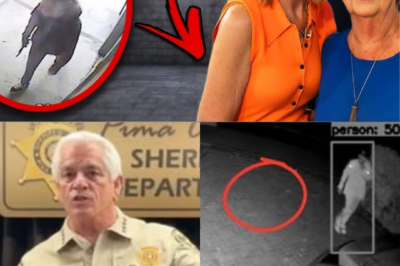
The troubling past of the #1 suspect in the Nancy Guthrie case: the “last person to see her” detail is pushing the investigation into a new direction as records, timing, and movements are re-examined. No public accusation—just mounting pressure, and a background that has investigators uneasy|KF
The investigation into the disappearance of Nancy Guthrie, the 84-year-old mother of Today Show host Savannah Guthrie, has taken an…
End of content
No more pages to load