🔥 ON-AIR SHOCKER: Jimmy Kimmel Just Did What No One Expected — and Aziz Ansari Never Saw It Coming 🔥|kf
Aziz Ansari’s decision to perform at the Riyadh Comedy Festival has sparked a heated conversation about the intersection of art, ethics, and political engagement.
As one of the most prominent names in comedy, Ansari’s participation in the controversial Saudi Arabian event has drawn both praise and criticism, with many questioning the role of artists in navigating complex geopolitical landscapes.

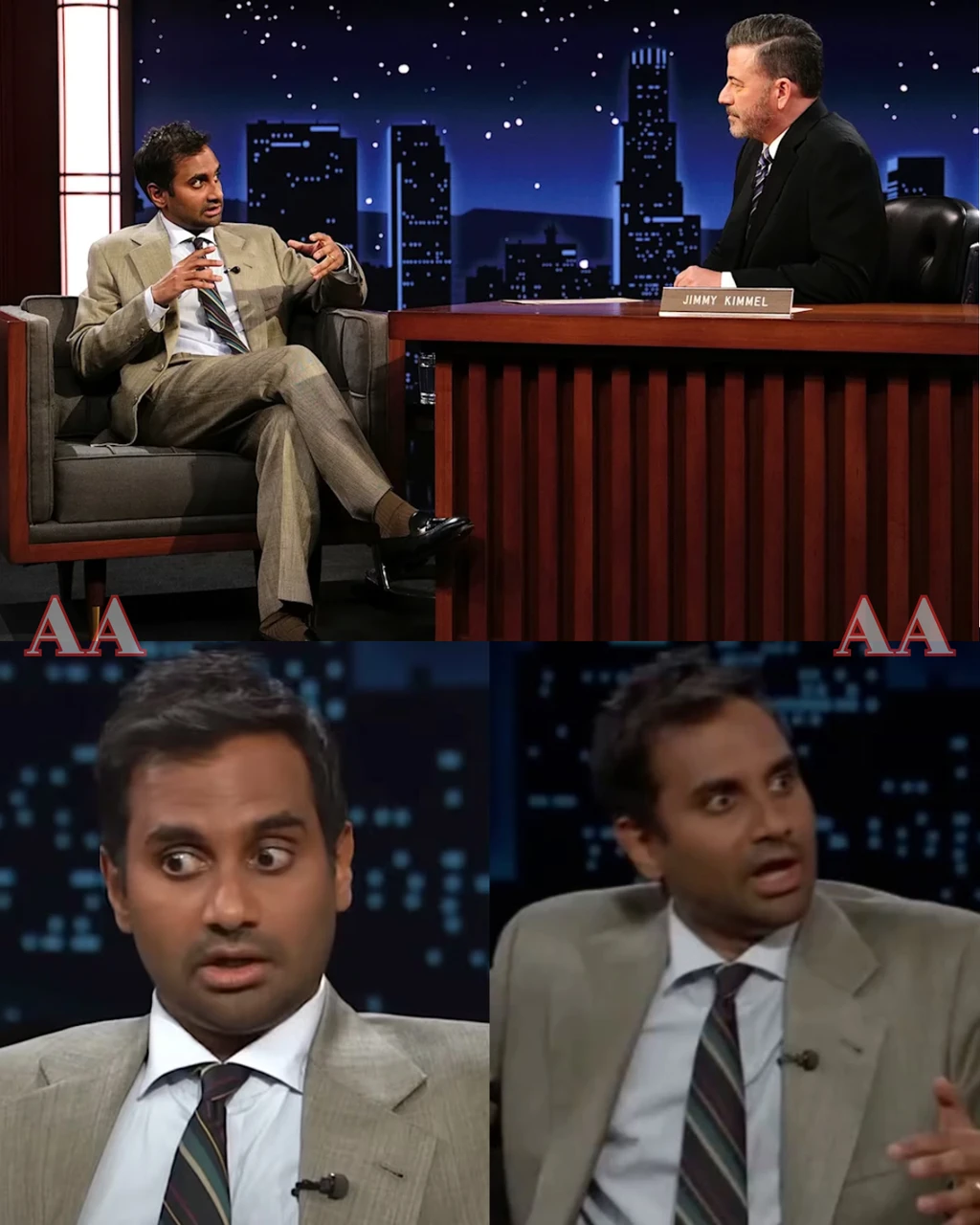
Appearing on Jimmy Kimmel Live on October 6th to promote his directorial debut, Good Fortune, Ansari found himself at the center of a pointed exchange with Kimmel.
Toward the end of their discussion, Kimmel raised the issue that has been dominating headlines: the ethics of performing in Saudi Arabia, a country whose government has been widely condemned for human rights abuses.
“People are questioning why you would go over there and take their money to perform in front of these people,” Kimmel said, referencing the backlash from comedians and critics alike.
“This is something that’s become a big part of the news because people, a lot of comedians especially, are very upset because the people who paid the comedians to come to this are not good people.
It’s a pretty brutal regime. They’ve done a lot of horrible, horrible things… I’m curious as to why you decided to do that.”
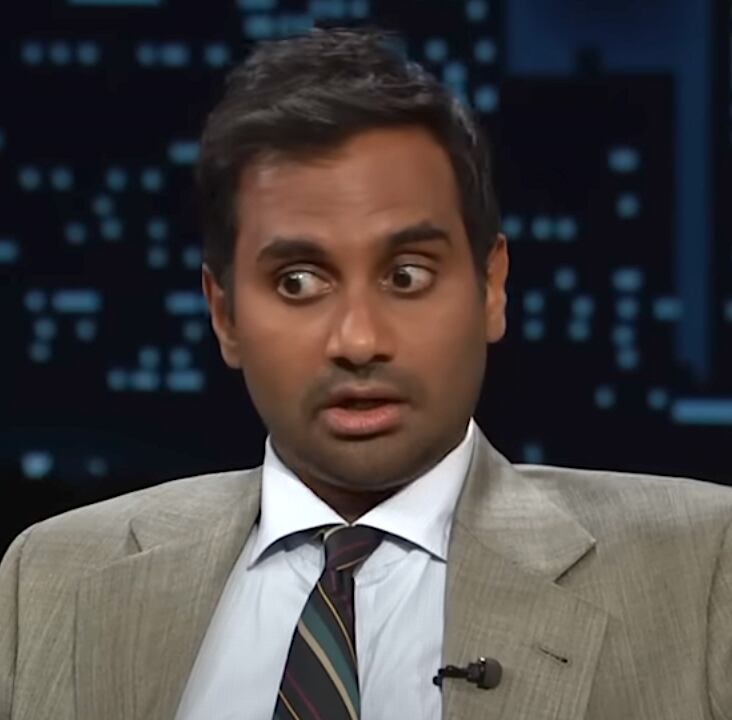
Ansari’s response was measured, acknowledging the complexity of the situation while defending his choice to participate.
He explained that his decision was informed by conversations with his family, particularly an aunt who had lived in Saudi Arabia for a time.
“She said, you know, there’s people over there that don’t agree with the stuff that the government’s doing, and to ascribe like the worst behavior of the government onto those people, that’s not fair,” Ansari said.
“Just like there’s people in America that don’t agree with the things the government is doing, right?”

This perspective—separating the people of a country from the actions of its government—is not new, but it remains contentious, particularly when applied to regimes accused of extreme atrocities.
Kimmel pressed further, pointing out the assassination of journalist Jamal Khashoggi in 2018, a crime widely attributed to the Saudi government.
“They murdered a journalist,” Kimmel said, adding, “These are not good people over there.”
Ansari’s defense shifted to the symbolic power of art and entertainment as tools for change. “I was just there to do a show for the people,” Ansari explained, sharing that he had discussed the decision with his wife beforehand.
“Whenever there’s repressive societies like this, they try to keep things out, whether it’s rock and roll music, or blue jeans, because it makes people curious about outside ideas, outside values.
And this is a very young country, like half the country is under the age of 25, and things can really change.
To me, a comedy festival felt like something that’s pushing things to be more open and to push a dialogue. You kind of have to make a choice of whether you’re going to isolate or engage.”
This notion of engagement—of using art to foster dialogue and potentially influence change—has been echoed by other comedians who performed at the festival, including Dave Chappelle and Bill Burr.
Chappelle reportedly declared during his set that “it’s easier to talk here [in Saudi Arabia] than it is in America,” a provocative statement that highlights the nuanced dynamics of free speech in different cultural contexts.
Burr, meanwhile, defended his participation on his podcast, calling the experience “great” and insisting that the people he encountered in Saudi Arabia were “just like us.”
However, not all performers have stood by their decision. Jessica Kirson, a lesbian comedian who also appeared at the festival, later apologized for participating, citing the country’s treatment of LGBTQ+ individuals as a reason for her regret. Louis C.K., on the other hand, has defended his appearance, adding to the growing divide among comedians over the ethics of performing in Saudi Arabia.
Ansari’s choice to donate part of his fee to organizations supporting free press and human rights—specifically Reporters Without Borders and Human Rights Watch—was another layer to his defense.
“It’s a complicated issue, but I felt like it was something that was pushing things in the right direction, I hope,” Ansari said.
The debate surrounding the Riyadh Comedy Festival is emblematic of a larger conversation about the responsibilities of artists in politically fraught contexts.
On one hand, there is the argument for engagement, for using art as a bridge to connect people and challenge oppressive systems.
On the other, there is the argument for isolation, for refusing to lend legitimacy to regimes that violate fundamental human rights.
Critics of Ansari’s decision argue that performing in Saudi Arabia, regardless of intention, risks normalizing or legitimizing the actions of its government.
They point to the country’s record on human rights, including its treatment of women, LGBTQ+ individuals, and dissidents, as evidence that participation in events like the Riyadh Comedy Festival sends the wrong message.
Supporters, however, see the festival as an opportunity to reach young Saudis, many of whom are eager for cultural exchange and exposure to new ideas.
With half the country’s population under the age of 25, there is hope that events like the comedy festival can contribute to a gradual shift in societal attitudes, fostering openness and dialogue in a country undergoing significant changes.
Ultimately, the debate over Ansari’s decision—and the decisions of other comedians who performed at the festival—reflects the inherent tension between art and politics.
Comedy, by its nature, is a form of engagement, a way of addressing uncomfortable truths and challenging societal norms.
But when the stage itself becomes a site of controversy, the line between engagement and complicity becomes blurred.
For Ansari, the choice to perform in Saudi Arabia was not made lightly.
His comments on Jimmy Kimmel Live suggest a thoughtful consideration of the issues at hand, as well as a belief in the transformative power of comedy.
Whether or not audiences agree with his decision, it is clear that Ansari views his participation as a step toward fostering dialogue and understanding in a complex and often divided world.
As the conversation continues, the Riyadh Comedy Festival stands as a microcosm of the larger questions facing artists today: How do we navigate the intersection of art and ethics?
Can engagement truly lead to change, or does it risk legitimizing oppressive systems?
And perhaps most importantly, what role should artists play in shaping the political and cultural landscapes they inhabit?
Aziz Ansari’s decision to perform in Saudi Arabia may not have clear answers, but it has undoubtedly sparked a vital dialogue—one that will continue to shape the way we think about art, ethics, and the power of comedy in the years to come.